Featured

Keeyante Griffin Midterm

Economic System

I think the American Dream is lost, I think its not redistributing opportunity. We can call it a wealth gap you can call it an income gap it’s a huge issue   


— Ray Dalio.

Economic System/Perception and Power Institution

Keeyante Griffin

Cascadia College

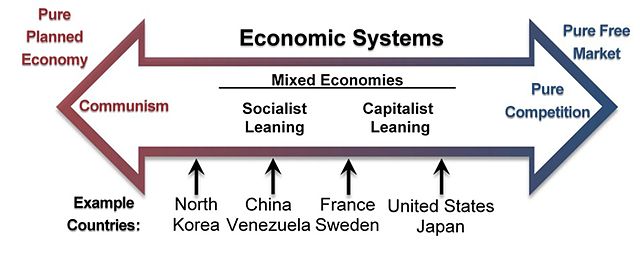
In the United States, the economic system is a mixed economy, meaning privately owned businesses’ and government both play important roles. Answer these questions and you got an economic system, 1.) What we will produce? 2.), How we will produce it? and 3.) Who gets it?  Karl Marx was a German philosopher, who classified them as land, labor, and capital. GDP has four components Consumer spending, Business Spending, government spending, and net exports. Now considering all that and answering my question who does and does not have power in this institution, in the community? What is power based on?

This image has an empty alt attribute; its file name is becu-guy.jpg

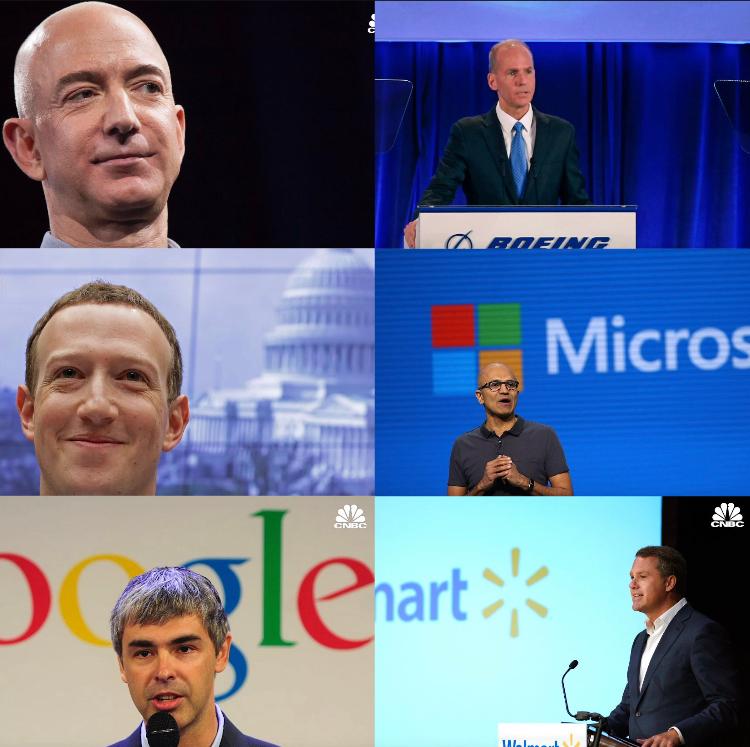
I talked to Silas Aemmer, a Member Consultant Lead at Bothell Neighborhood Financial Center BECU, and we concluded that power in the economic system is all based on who has the most assets and can monopolize their assets and continue to supply the people with their demands. Aemmer used the example of Facebook’s CEO Mark Zuckerberg giving out your personal information from Facebook to third parties for money(https://www.cbsnews.com/news/facebook-your-personal-info-for-sale/) . In this economy, the ones in power are the rich even though they are only a small percentage of the American people.
This image has an empty alt attribute; its file name is richh.jpg

  Bhaskar Sunkara, the founding editor and publisher of Jacobin, said, “If you look at fortune 500 CEOs these people have tremendous say in our lives over what you can consume over how you work over the future of our country and they’re subject to no democratic mandate accountable to no one but their  shareholders”(https://www.youtube.com/watch?v=BlrDpTGRREA) .In this way, the economic system is deeply flawed in the sense that it’s the corporations that get the benefit, not the workers.  In Neil Postman’s book called “Amusing ourselves to Death,” he says “What is peculiar about such interposition of media is that their role in directing what we will see or know is so rarely noticed (11).” I bring this quote into play because the people in charge, the people with money are people who own Google, Facebook, Amazon, etc. They are the ones who control the internet, not the government. Americans are so content on blaming the government and their opposing political standpoint that they cannot take a step back and look at it differently. .

This image has an empty alt attribute; its file name is 126919_americaneagle_0-1.png

My lens is perception and perception can be described as a sensory bubble. Whatever room you’re sitting in, if you are indoors or outdoors, it doesn’t matter and you’re encased in your bubble of perception and that determines how you interact with reality (https://www.youtube.com/watch?v=8Jbvik4IA3o).  Your phone places a huge role in creating perceptions in 2019. Who you follow and what you look at on your phone will change your perception of reality and your thoughts on people. Ronald Takaki, author of “A Different Mirror,” says, “How can diverse Americans become “one people?” I believe that one path towards becoming on people is for us to pursue the study of the past that includes all of us, making all of us feel connected to one another as “we the people,” working and living in a nation, founded and “dedicated” (to use Lincoln’s language) to the “proposition” that “all men are created equal”(59). This quote brings me back to my community partner Aemmer because he talked to me about socialism and how it could benefit the economy more than the free market because Americans should be structuring the economy towards the human need and not towards accumulating profit. Universal Healthcare, Federal Jobs guarantee higher than minimum wage, mass unionization of the workforce, and tuition-free university That is the goal of Democratic Socialism. Through a tax increase in America for Rich and middle class. If you go to Sweden, Norway, or Finland it’s not just the rich paying 50 to 60 percent taxes it’s also the middle class.
This image has an empty alt attribute; its file name is thomas-pain.png

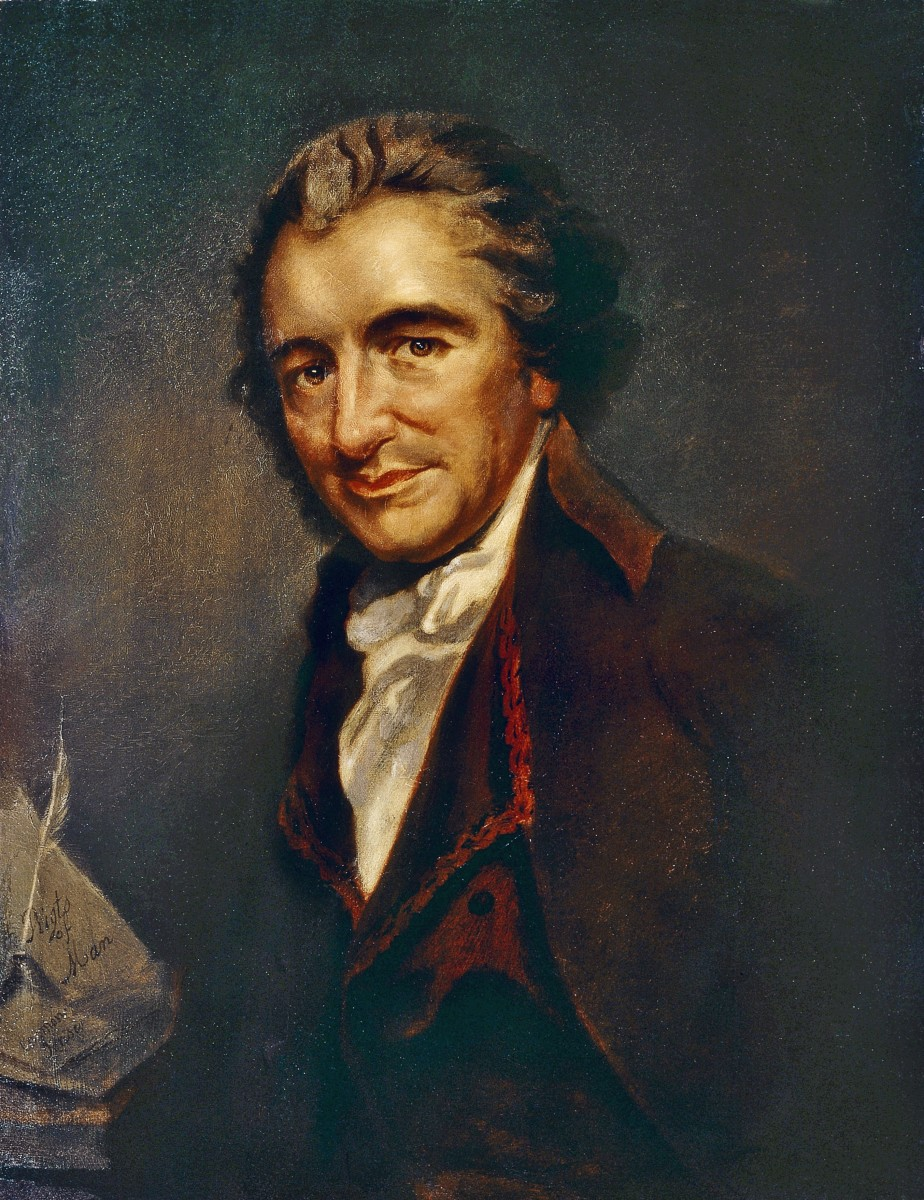
 In the earlier years of American History, Thomas Paine’s taxed wealthy landowners to help pay for a basic income for all citizens over the 19th century these socialist principles incubated in labor unions and later flourished during the industrial revolution (https://www.youtube.com/watch?v=BlrDpTGRREA) .  Darong Dai author of Economic Modeling argues that “economic institutions encouraging economic growth emerge when efficient political institutions are constructed and sufficiently enforced.” (https://www.sciencedirect.com/science/article/pii/S0264999313001429#!)  Dai talks about the steps we can take to better our relationship with each other. Firstly, we show the necessary condition, which ensures group rationality of cooperation between the players. Secondly, we define what’s right and what’s wrong. Thirdly, we obtain the payoff distribution procedure of the cooperative game-based rules implicated in the first step and provided that the players agree to act according to an agreed-upon optimal principle, Finally, we establish the corresponding optimal economic growth rate conditional on the cooperative equilibrium solution.  

This image has an empty alt attribute; its file name is helping-hand.png

At the end of the day, the only way the Economic system can get better is through a global feeling of helping each other and helping the planet. If not through democratic socialism then through something that gives you an incentive when you help your local community whether that be buying locally grown food, taking the bus instead of driving, buying American made stuff, or helping someone in need. If you do those things you get an incentive. The Dominion effect is another way to help the economy. Buying environmental resources like solar power or switching to a hybrid or electric cars can be beneficial in the long run plus the more you see of something the more you will compare in your head if you want to buy it or not. The one with the power is the consumer  but through mass manipulation of the media the suppliers, like Amazon, have made things so convenient and easy it makes it seem like such a hassle to wait 2 weeks for something to be at your house or even going to the mall when I have next day shipping at my fingertips. Inflicting pleasures are stopping us from progressively moving forward if you want a change you need to stop buying from large corporations and find a local company to help.   

References

Actualized.org. (2018, November 10). What Is Perception? – The Metaphysics Of Perception. Retrieved from https://www.youtube.com/watch?v=8Jbvik4IA3oCNBC. (2019, July 27). Why Democratic Socialism Is Gaining Popularity In The United States. Retrieved from https://www.youtube.com/watch?v=BlrDpTGRREACooperative economic growth. (2013, May 17). Retrieved from https://www.sciencedirect.com/science/article/pii/S0264999313001429#!Postman, N. (2007). Amusing ourselves to death. Upper Saddle River: Pearson Education.State, M. A. (2017, October 27). Government Power vs Economic Power (by Ludwig von Mises). Retrieved from https://www.youtube.com/watch?v=mYgIo16r02YTakaki, R. T. (2008). A different mirror: A history of multicultural America. Boston: Little-Brown.


Bishrelt Baterdene

Economic system

How safe is it for different people to share their truths and how can i foster a culture of safety and relational trust to move social justice issue forward? Considered through the lens of Values.

VALUE

The utility of an object in satisfying, directly or indirectly, the needs or desires of human beings, called by economists “value in use;” or its worth consisting in the power of purchasing other objects, called “value in exchange.” Also the estimated or appraised worth of any object of property, calculated in money. The term is also often used as an abbreviation for “valuable consideration,” especially in the phrases “purchaser for value,” “holder for value,” etc.

It’s easy for poeple sitting in a privileged position to say that everyone can speak, but i don’t think it’s true. if you are powerless, your voice has less impact. If we moved to a more democratic society that was really based on the idea that everyone had a voice and a vote, that might change. But right now, if your voice threatens the status quo, you’ve got to work a lot harder to make your voice heard. Also, we have a very short attention span, so making yourself heard long enough to make a difference is a challenge. Dr. Lisa Citron, economics professor at Cascadia College, gave me example of Megan Rapinoe, the co-captain of the US Soccer Team. She used their exellence performance at the World Cup to highlight the struggle for equal pay and support for women’s soccer. There was a lot of attention, for a short of time, and now we’ve moved on to other things.

“Ronald Takaki ( narrator of A different mirror book) traces the economic and political history of Indians, African Americans, Mexicans, Japanese, Chinese, Irish, and Jewish people in America, with considerable attention given to instances and consequences of racism.

Postman’s book Amusing Ourselves to Death opens by saying that Aldous Huxley’s vision of the future in his book and Postman concludes his book by acknowledging that television cannot and should not be simply eradicated. Rather, he believes that Americans can save themselves by becoming aware of the potential television has to permanently stymie rational discussion. Once we recognize that forms of media wield this kind of power, we will be able to resist the urge to “entertain ourselves to death.”

The United States has a mixed economy. It works according to an economic system that features characteristics of both capitalism and socialism. A mixed economic system protects private property and allows a level of economic freedom in the use of capital, but also allows for governments to intervene in economic activities in order to achieve social aims and for the public good.

References

Definition of Value of Reference (Black Law Dictionary). (2019)

Citron Lisa (2019, July 29). Group interview with Community Partner (Online interview)

Takaki, R. (2008). A different mirror: A history of multicultural America. Part two: Contadictions

Postman, N. (2006). Amusing ourselves to death: The age of show business.

Lorecentral.org (2017, December). American Economic system advantage.

Maxim Balashov

Who are the people affected by the current structure of oppression? Are they at the table? Analyzed through the lens of Frame or Reference.

Frame of Reference, as defined by the Merian Webster Dictionary, is “a set of ideas, conditions, or assumptions that determine how something will be approached, perceived, or understood.” Every person has their own unique Frame of Reference, and an awareness of this leads to less bias and an improved understanding of other’s views.

When it comes to the people affected by any sort of economic oppression, it most commonly starts from the top, where those who benefit from the status quo participate in types of economic oppression, whether they intend to or not. Dr. Lisa Citron, economics professor at Cascadia College, explains that, “…even people who don’t feel like they themselves participate in any sort of oppression are still reluctant to change things because what is going on works for them.”(Citron) When viewing the situation from the frame of reference of someone who is not benefited by the status quo, any sort of oppression becomes much more clear. Because of these varying frames of reference, communication between these different groups becomes extremely important. For this varying groups that are on different levels of our economic hierarchy must all be present at the table of discussion. Unfortunately, today this communication is very rare, as Jon Talton, Economy Columnist at the Seattle Times, explains, ” We’re more divided than any time since the eve of the Civil War and few minds are being changed.”(Talton)

A commonly spoken about topic today regarding the United States economy, is the spread of wealth across the economic classes of Americans. As you likely have already heard about, an enormous majority of our countries wealth is held by an extreme minority of the richest people in the country. This is a product of the American capitalist system that has been in place since the founding of the nation. In A Different Mirror, by Ronald Takaki, it is explained that this accelerated when “In 1981, the Census Bureau announced that the frontier no longer existed.” And that, “What had happened was the explosive formation of an industrial economy. Between 1815 and 1860, the value of manufactured goods increased eightfold. By 1890 U.S. manufacturing production had surpassed the combined totals of England and Germany.” (Takaki, 209). The workload behind this expansion fell upon the working class which expanded to serve the business owners, who profited majorly from this economic expansion. Fast forward to today, and this economic gap between the working class and the wealthy class has expanded almost exponentially, as you can see in the chart below. Because of this, the American working class, which happens to also be the majority of Americans, are affected by economic oppression in which the one to ten percent hoard almost all of the nations wealth, and by extension almost all of its power.

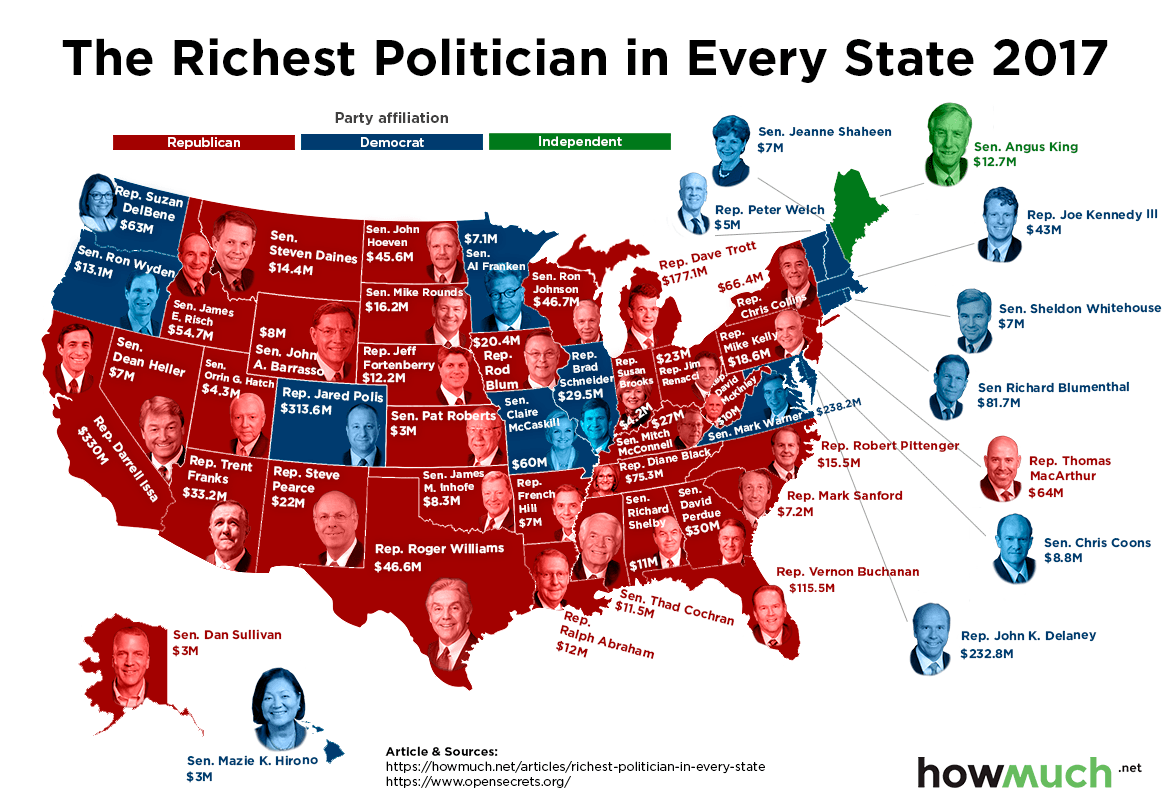
This imbalance of economic power has bleed into United States politics as well. The majority of our elected officials at the moment have very similar frames of reference, especially when it comes to their economic views, as many members of our current presidential administration have been wealthy since the day they were born. Due to this, working class people that have dealt with economic oppression do not have a seat at the current political table. Neil Postman, author of Amusing Ourselves to Death, explains a political viewpoint he observed from his father, who said, “He never doubted that there were good men among Republicans. He merely understood that they did not speak for his class.”(Postman, 133). Our two party based political system encourages actions of self interest to only ones party and supporters, rather than the american people as a whole. While I could personally not defend all of our current wealthy leaders of greed and exploitation of working class people, I believe some are guilty more of ignorance, than of hate and gleeful oppression. They are ignorant to frames of reference other than their own, which they have not been exposed to and are unlikely to have a dialogue with in this current political climate as Talton pointed out. Instead, these wealthy politicians are inclined to protect the current economic structure, as it has benefited them in their lives, and it benefits the people that they as politicians represent (often their friends and business partners). This fits in with what Citron said, as the current system of economic oppression is held up by those acting in self interest, which is boosted when there is little diversity in background among our politicians.

I learned while doing this project how the Frame of Reference belonging to people in positions of power plays a large role in the economic structure that exists under them. To me this signified the importance of balanced dialogue in our conversations as a society, as refusing to listen to the points that people make simply because of the party or category they fall under is ignorant to their different Frames of Reference than the ones you are used to hearing, and therefor may broaden your knowledge of the subject.

Citations

Definition of Frame of Reference (Marian Webster). (2019).

Citron, L. (2019, July 29). Group Interview of Lisa Citron [Telephone interview].

Talton, J. (2019, July 29). Interview of Jon Talton, Seattle Times [E-mail interview].

Takaki, R. (2008). A different mirror: A history of multicultural America. Boston: Little-Brown.

Postman, N. (2006). Amusing ourselves to death: Public discourse in the age of show business. New York, NY, U.S.A.: Penguin Books.

Ben Russell

How Do We Understand The Economic And Racial Forces Behind The Inequities We See? How Might We Name The “System” In Which We Are Sitting? Analyzed Through The Lens Of Power.

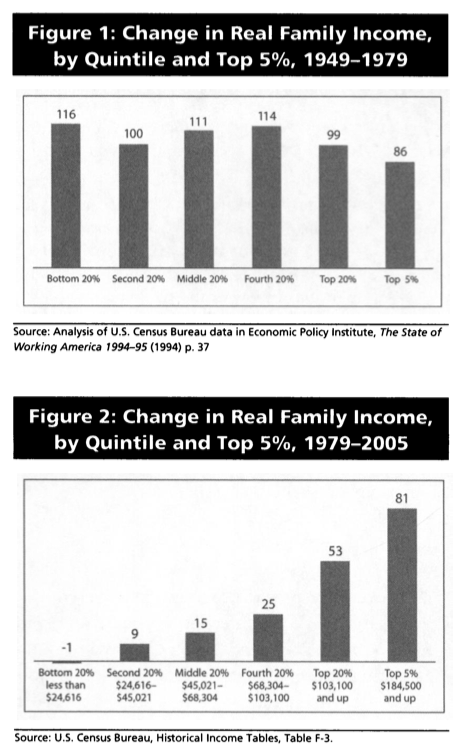
The current state of economic inequality did not come about overnight.  In fact, the three decades proceeding World War II showed inequality in decline.  This trend toward “shared prosperity”  stopped in the mid-1970’s as corporations and the wealthy strongly increased their influence and power over politics in what has been called the nation’s “great U-turn”.  The deregulation of the financial system, coupled with the Supreme Court ruling that government may not ban election spending by corporations, has allowed the wealthy to use their power to shape our democracy into a system which Senator John McCain described as “an elaborate influence-peddling scheme by which both parties conspire to stay in office by selling the country to the highest bidder.” (Goldberg, 2012, p.211, 216).

I asked Jon Talton, Economy Columnist at the Seattle Times for his thoughts on this concept.  He replied “Inequities have existed in every society in history, including and especially in communist states. Today’s America remains full of opportunity and less de jure discrimination than any time in history. The rub is that since the late 1970s the super-rich have been pulling away, while the fruits of the economy are less evenly shared than the era from the 1940s through the 1970s.  Racial issues inform some of this. For example, a century of Jim Crow hurt the ability of blacks to build and pass along intergenerational wealth. But progress is undeniable, too, including the rise of a large black middle class.” (Talton, 2019)

The following graphs illustrate the changes in income distribution in the decades following World War II, as well as after the great U-turn in the 1970’s.

Dr. Lisa Citron, economics professor at Cascadia College, sees the issue of inequality in America as a class-based problem.  Speaking about the idea of how to succeed in the U.S. she said “in order to get ahead you need to go to college, but who goes to college?”  Comparing privileged well-off students to those from poorer schools with less resources, one of the things she found were students from low income schools who had the desire to attend a program like engineering, only to find they couldn’t qualify because their schools lacked necessary classes like AP Calculus that they would need to be fluent in to succeed.  Talking about wealthy entitlement and the recent college admissions scandal she says “Why do these rich people from Hollywood feel the need to do that?  They’ve already got so much money, what’s the point?” (Citron, 2019)

Looking at the state of our economy, and the composition of our current government, I would describe our “system” as a very obvious plutocracy.  We have a billionaire president, with a cabinet full of other billionaires and millionaires, and many if not most of our members of congress are also millionaires.  Is it surprising that one of the only substantial pieces of legislature they’ve been able to pass was tax reform that mainly benefitted their own class?  Takaki (2008) illustrates this system in action all the way back in 1861, noting “The Civil War was initiated by the planter class of the South.   Although they constituted only 5 percent of the southern white population, the slaveholders were dominant in politics.  Defending their profitable “peculiar institution,” this ruling elite took their states out of the Union” (15). This analogy is particularly disturbing when combined with Jon Talton’s statement that “We’re more divided now than any time since the eve of the Civil War and few minds are being changed.” (Talton, 2019)

In 2002, former Nixon advisor Kevin Phillips described “the relentless takeover of U.S. politics and policymaking by large donors to federal campaigns and propaganda organs,” signaling plutocracy’s emergence and the hamstringing of a democratic government’s ability to reduce economic inequality through policy.  For example, in the early 1970’s only a few Fortune 500 companies employed lobbyists in the District of Columbia, but by decade’s end that number rose to 80 percent.  (Goldberg, 2012, p.215- 216).  

With government in their control, those in power turned their attention to media, where between the years 1983 and 2004 the number of corporations controlling most mass media shrank from 50 to five, leading media watchdog Fairness and Accuracy in Reporting (FAIR) to hold that “mergers in the news industry have accelerated, further limiting the spectrum of viewpoints that have access to mass media.”  And of course the viewpoint projected by the media was the viewpoint of its owners. (Goldberg, 2012, p.217).  Further supporting this argument, Postman (2006) writes “The Constitution was composed at a time when most free men had access to their communities through a leaflet, a newspaper, or the spoken word…But the Founding Fathers did not foresee that tyranny by government might be superseded by another sort of problem altogether, namely, the corporate state, which through television now controls the flow of public discourse in America” (139).

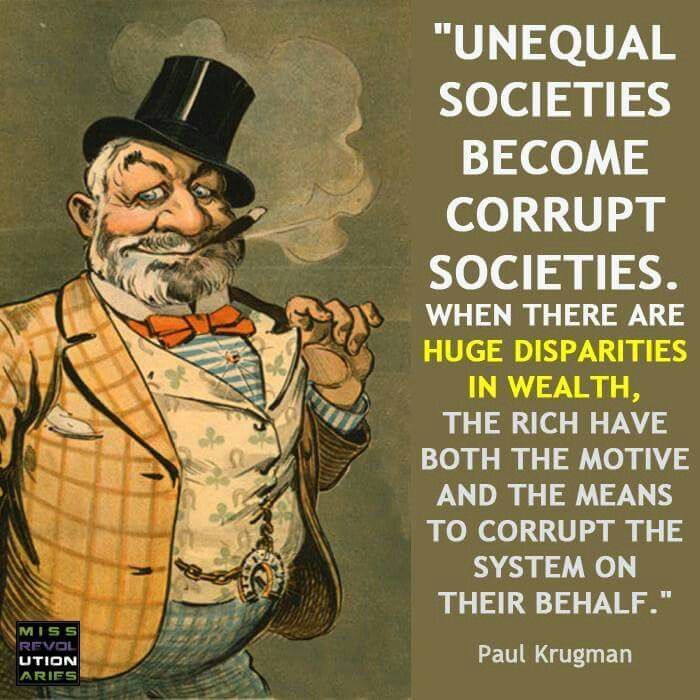
Power, as defined by Black’s Law Dictionary (2011) is “an authority to do some act in relation to real property, or to the creation or revocation of an estate therein, or a charge thereon, which the owner granting or reserving such power might himself perform for any purpose.”  In a plutocracy, power is derived from wealth, and in the actions displayed by the wealthy elite in their attempts to control policy and public opinion, there is a clear connection to this definition of power.  They create corporations, political action committees, and monopolize news outlets.  They hire lobbyists and charge them with swaying politicians to vote in their favor.  Having access to obscene amounts of resources, they are able to not only use their power for controlling the economy, but ensuring they are able to remain in power and continue to do so indefinitely.

As the power of these lobbyists grew, their influence over legislators led to a series of deregulating policies that brought the nation to disaster.  One case in particular, Marquette Nat. Bank of Minneapolis v. First of Omaha Service Corp, permitted lenders in states with liberal interest-rate ceilings to lend to consumers in states with more conservative rates, causing credit cards to be granted to people who otherwise wouldn’t have qualified, leading to a huge increase in personal bankruptcies.  This paved the way to predatory lending and the subprime mortgage scandal that rocked the U.S. economy and sent it into a years long recession.  As part of this practice “some buyers who were qualified for conventional terms were nonetheless induced to take out subprime mortgages because the interest rates on those were higher.  African Americans were targeted by predatory lenders.  In fact, middle-class African American neighborhoods had higher rates of subprime mortgages than poor white neighborhoods. (Goldberg, 2012, p.218-219)

President Obama (2013) assumed office in the midst of this recession and made battling economic inequality one of his top priorities, saying “the combined trends of increased inequality and decreasing mobility pose a fundamental threat to the American dream, our way of life, and what we stand for around the globe…I believe this is the defining challenge of our time”.  With control of the media, those in power fought back, not wanting to cede their power or assets to Obama’s efforts.  They labeled his attempt to narrow the divide as “class warfare” and exerted enough pressure on congress to split the democratic congress, forcing him to focus his efforts elsewhere.

Senator Marco Rubio (2011) once made a speech in which he said “We have never been a nation of haves and have-nots.  We are a nation of haves and soon-to-haves.  People who have made it, and people who will make it.  Supporting this line of thought was a Pew Research Poll taken a few years after the end of the Great Recession which found: 65% believe the gap between the rich and everyone else has increased in the last 10 years.  By a 60% to 36% margin, most Americans feel the economic system unfairly favors the wealthy.  And “60% say most people who want to get ahead can make it if they’re willing to work hard (Pew Research Center, January 2014).  Despite the evidence against it, it seems that most Americans believe that hard work is all it takes to rise to the top.  Ronald Wright (2019) quotes John Steinbeck as telling him “socialism never took root in America because the poor see themselves not as an exploited proletariat, but as temporarily embarrassed millionaires.  This helps explain why American culture is so hostile to the idea of limits, why voters during the last energy shortage rejected the sweater-wearing Jimmy Carter and elected Ronald Reagan, who scoffed at conservation and told them “it was still morning in America”.  No where does the myth of progress have more fervent believers” (124). 

Solving these inequalities is not in the scope of this writing, nor is it simple enough to merely sit down and pen a solution.  However looking at the causes of these problems, the histories associated with them, and recognizing the forces that drive them, allows us to at least notice and be cognizant of what’s happening.  Our elected representatives should be held accountable and removed when they fail to stand up for those who elected them, and bow to the corrupt power of the wealthy.  Our financial institutions should be monitored and regulated to prevent them from taking advantage.  Media should be held to account for false narratives, and not just by angrily yelling “fake news”.  In all cases proportionate fines and criminal prosecutions need to be implemented when justified to maintain the integrity of both our economy, and our democracy.

Resources

Citron, L. (2019, July 29). Group Interview of Lisa Citron [Telephone interview].

Goldberg, G. S. (2012). Economic Inequality and Economic Crisis: A Challenge for Social Workers. Social Work, 57(3), 211-224. doi:10.1093/sw/sws005

Pew Research Center, January 2014, “Most See Inequality Growing, but Partisans Differ over Solutions”. (n.d.). Retrieved from https://www.pewresearch.org/wp-content/uploads/sites/4/legacy-pdf/1-23-14-Poverty_Inequality-Release.pdf

Postman, N. (2006). Amusing ourselves to death: Public discourse in the age of show business. New York, NY, U.S.A.: Penguin Books.

Remarks by the President on Economic Mobility. (n.d.). Retrieved from https://obamawhitehouse.archives.gov/the-press-office/2013/12/04/remarks-president-economic-mobility

Rubio: “We Are A Nation Of Haves And Soon-To-Haves”. (n.d.). Retrieved from https://www.rubio.senate.gov/public/index.cfm/2011/12/rubio-we-are-a-nation-of-haves-and-soon-to-haves

Talton, J. (2019, July 29). Interview of Jon Talton, Seattle Times [E-mail interview].

Takaki, R. T. (2008). A different mirror: A history of multicultural America. Boston: Little-Brown.
What is POWER? definition of POWER (Black’s Law Dictionary). (2011, November 04). Retrieved from https://thelawdictionary.org/power/

Wright, R. (2019). A short history of progress. Toronto: House of Anansi Press.

Introduce Yourself (Example Post)

This is an example post, originally published as part of Blogging University. Enroll in one of our ten programs, and start your blog right.

You’re going to publish a post today. Don’t worry about how your blog looks. Don’t worry if you haven’t given it a name yet, or you’re feeling overwhelmed. Just click the “New Post” button, and tell us why you’re here.

Why do this?

  • Because it gives new readers context. What are you about? Why should they read your blog?
  • Because it will help you focus you own ideas about your blog and what you’d like to do with it.

The post can be short or long, a personal intro to your life or a bloggy mission statement, a manifesto for the future or a simple outline of your the types of things you hope to publish.

To help you get started, here are a few questions:

  • Why are you blogging publicly, rather than keeping a personal journal?
  • What topics do you think you’ll write about?
  • Who would you love to connect with via your blog?
  • If you blog successfully throughout the next year, what would you hope to have accomplished?

You’re not locked into any of this; one of the wonderful things about blogs is how they constantly evolve as we learn, grow, and interact with one another — but it’s good to know where and why you started, and articulating your goals may just give you a few other post ideas.

Can’t think how to get started? Just write the first thing that pops into your head. Anne Lamott, author of a book on writing we love, says that you need to give yourself permission to write a “crappy first draft”. Anne makes a great point — just start writing, and worry about editing it later.

When you’re ready to publish, give your post three to five tags that describe your blog’s focus — writing, photography, fiction, parenting, food, cars, movies, sports, whatever. These tags will help others who care about your topics find you in the Reader. Make sure one of the tags is “zerotohero,” so other new bloggers can find you, too.

Design a site like this with WordPress.com
Get started